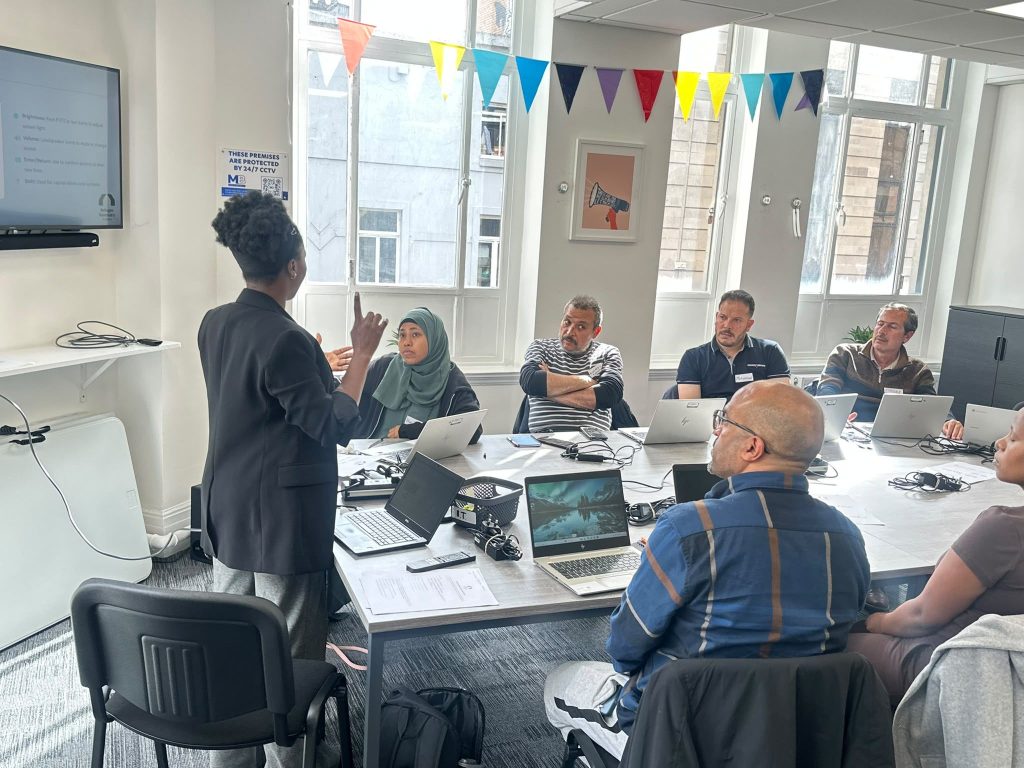
From our recent collaboration with merl, peer researchers facilitated discussions with other peers to understand more about how people perceive and understand the terms mental health and wellbeing.
The pictured quotes ‘mad’, ‘crazy’, ‘psycho’ and ‘bewitched’ were some of the words that were discussed when the groups talked about how mental health was perceived in their home countries.
Most individuals that come to Scotland seeking asylum are not familiar with the term ‘mental health’, referring to mental distress as ‘thinking too much’. Many fear speaking about the mental health struggles they face due to societal stigma, shame, the pressures of gender norms and the fear of negatively impacting their asylum case.
During this research project peer-researchers and focus group participants were able to learn more about what mental health means and discussed which services of support helped improve their mental health and wellbeing. This process provided a safe space to share experiences and begin to break the stigma of discussing mental health without fear or judgement. A quote from a peer-researcher, ‘in my country I never learned about mental health but I’m learning this subject and now I understand, not too much, but I understand’.
Our mental health and wellbeing program was co-developed with our service users to provide safe spaces for people to talk, connect and build relationships which support better wellbeing.
If you would like to support this project you can donate via the link below,
https://localgiving.org/charity/refugeesanctuaryscotland…
In our next post regarding this project, we will share the key findings on mental health and wellbeing activities asylum-seekers are undertaking in Glasgow.